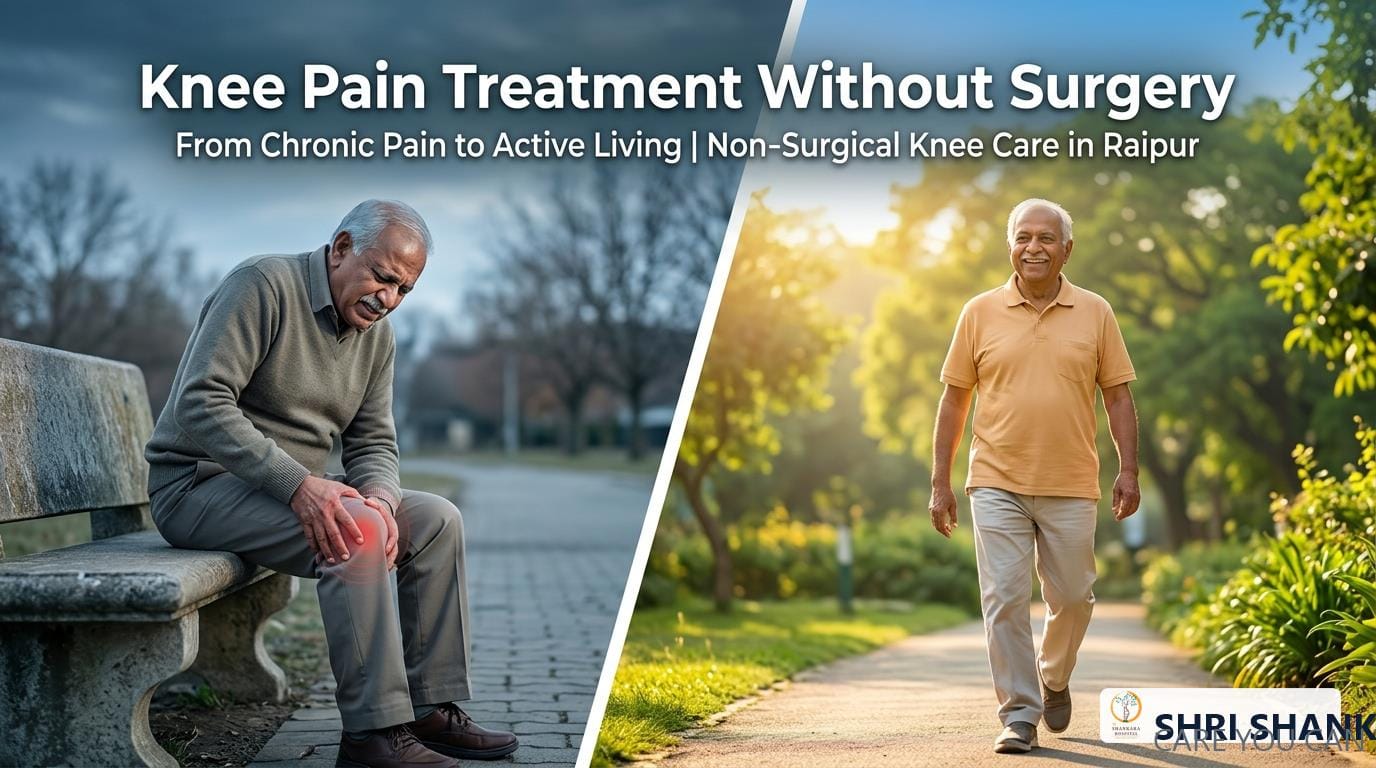
Meet Sharma ji, 62 years old. He used to walk to the market every morning. Now he thinks twice before climbing the stairs. His knees ache, they feel stiff after sitting, and a neighbour has told him, “Doctor will say operation.” So he has started searching for knee pain treatment without surgery.
If this sounds like someone in your home, you are not alone. And you may have more choices than you think.
| Quick answer: Not every painful knee needs a replacement. If your arthritis is in the early or middle stage, treatments like PRP injections, along with exercise and weight control, may reduce pain and help you move better. A proper check-up decides what suits you. |
Why Are So Many People Worried About Knee Pain?
Osteoarthritis (OA) is the most common type of arthritis in the world. Global Burden of Disease data show that 595 million people had osteoarthritis in 2020, which is 7.6% of the world’s population. The same study found that the knee is the most common joint affected, and it expects knee cases to rise by about 75% by 2050 (Global, regional, and national burden of osteoarthritis, 1990–2020 and projections to 2050 +2).
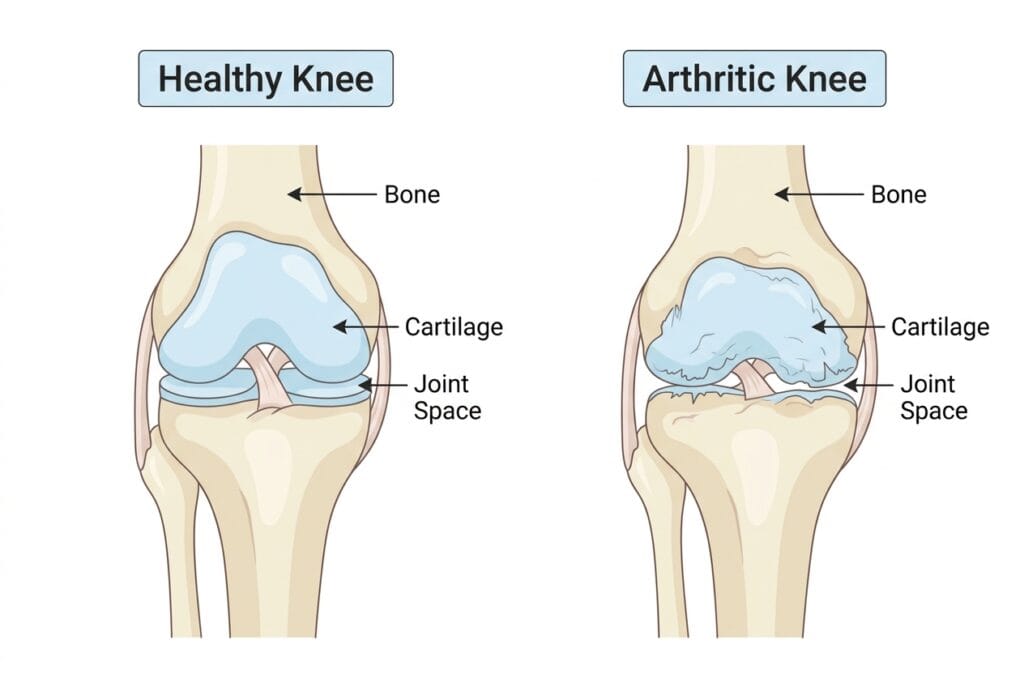
In simple words, the cushion (cartilage) inside your knee slowly gets thin. Bones start rubbing, and that causes pain, swelling and stiffness.
Common reasons:
- Age, especially after 40
- Extra body weight. Researchers link high BMI to about 20% of osteoarthritis cases rheum-live
- Old knee injuries
- Long hours of squatting, climbing or heavy lifting
Book your non-surgical knee consultation today:Dr. Sachin Mall |+91-9285122111Shri Shankara Hospital, New Rajendra Nagar |
Why Painkillers and Surgery Are Not Always the First Answer
Painkillers give quick relief, but they only cover the pain. They do not slow down the wear in the joint. Taking them for months can also trouble your stomach and kidneys, especially in older people.
Total knee replacement is a good and proven surgery. When a knee is badly damaged, it can change a person’s life. But it is a big operation. It needs hospital stay, weeks of rehab, and it cannot be undone.
So the smart question is not “Surgery or no surgery?” It is: “Have I tried the right treatments at the right time?”
Many people jump straight to surgery or keep eating painkillers for years. The middle path, treating the knee early, often gets missed.
What Is Regenerative Treatment for the Knee?
Regenerative (or “orthobiologic”) treatment uses substances from your own body to calm the joint and support healing. Here are the common ones in simple language.
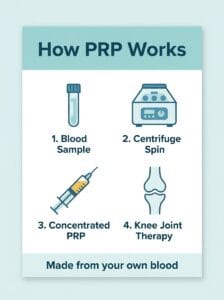
- PRP (Platelet-Rich Plasma): A small amount of your blood is taken and spun in a machine. This gives a concentrated part full of platelets, which carry natural growth signals. This is injected into the knee, usually with ultrasound guidance.
- GFC (Growth Factor Concentrate): A similar idea. It is a more refined concentrate of growth factors from your blood.
- BMAC (Bone Marrow Aspirate Concentrate): Taken from your bone marrow, it contains cells and growth signals. Its use is newer, and the evidence is still growing.
What Does the Science Say? An Honest Look
- A meta-analysis of six good-quality trials with 1,162 patients with mild-to-moderate knee osteoarthritis found real improvement with PRP at 6 and 12 months. The pain relief was moderate, not magical. openrepository
- Another review found that benefits began around 2 months, lasted up to 12 months, and were better in patients with less advanced arthritis. epistemonikos
- A French expert panel said that PRP is an effective symptom treatment for early to moderate knee OA, with a course of 1 to 3 injections, given under ultrasound or X-ray guidance. springer
- A large overview of reviews found PRP is effective for knee OA without a higher risk of side effects. nih
The other side: Some big medical bodies are more careful. The American College of Rheumatology and OARSI have advised against routine PRP use, and Australia’s RACGP guideline does not recommend stem cell therapy for knee OA. The main reason is that studies use different methods, so results are not always the same. springerracgp
What does this mean for you? These treatments can help many people with early or moderate arthritis, but they are not a cure, and they will not grow back a completely worn-out knee. A good doctor will
tell you this clearly.
Is PRP Right for You?
PRP may be worth discussing if you:
- Have knee pain from early or moderate osteoarthritis
- Want to delay or avoid surgery
- Are not getting enough relief from tablets and physiotherapy
- Are active and want to keep walking, cycling or playing sports
PRP is usually not suitable if you have:
- Bone-on-bone arthritis with severe deformity
- Active infection, or certain blood disorders
- Cancer treatment going on, or blood thinners that cannot be paused
- Fever or illness on the day of the injection
Your doctor will check this with an examination and an X-ray, and sometimes an MRI.
Book your non-surgical knee consultation today:Dr. Sachin Mall |+91-9285122111Shri Shankara Hospital, New Rajendra Nagar |
What to Expect: Your Treatment Journey
(Hospital team: please edit this section to match your exact protocol.)
- Consultation and scan. The doctor checks your knee, reads your X-ray or MRI, and explains your stage of arthritis.
- Treatment plan. It may include PRP or GFC, physiotherapy, weight advice and exercise.
- The procedure. A small blood sample is taken, processed, and injected into the knee. It usually takes a short time, and most people go home the same day.
- After the injection. Mild soreness or swelling for a day or two is common. Your doctor will guide you on rest, walking and exercise.
- Recovery. Improvement is gradual. Many studies show benefit building over the first weeks and months, so patience matters.
Injections work best when combined with strong thigh muscles, a healthy weight and good daily habits.
Simple Habits That Protect Your Knees
- Walk daily, and swim or cycle if you can
- Strengthen thigh muscles with simple exercises
- Lose extra weight. Even a little helps.
- Avoid sitting cross-legged or squatting for long hours
- Use Indian-style toilets carefully, or switch to a commode if the knee hurts
- Do not ignore pain that lasts more than a few weeks
Frequently Asked Questions on Knee Pain Treatment Without Surgery.
| Que. | Can knee pain be treated without surgery in Raipur? |
| Ans: | Yes, in many cases. Early and moderate knee arthritis can often be managed with exercise, weight control, medicines and injections such as PRP. Surgery is usually kept for severe damage. |
| Que. | How long does PRP last in the knee? |
| Ans: | Studies show relief can last about 6 to 12 months in many patients. It differs from person to person. |
| Que. | Is PRP therapy safe? |
| Ans: | PRP uses your own blood, so allergy risk is low. Reviews have not found more side effects than other injections. Mild pain or swelling after the injection is the most common issue. |
| Que. | Does PRP regrow cartilage? |
| Ans: | Current evidence shows it mainly reduces pain and improves movement. Strong proof of cartilage regrowth is not available yet. |
| Que. | How many PRP injections are needed? |
| Ans: | Usually 1 to 3, depending on your knee. The French expert panel also suggests 1 to 3. |
| Que. | Will I still need knee replacement later? |
| Ans: | Maybe, if arthritis is advanced or keeps progressing. But PRP and other care may help you postpone it and stay active longer. |
Conclusion: Don’t Wait Until Walking Becomes a Struggle
Knee pain is not just “part of getting old.” The earlier you get it checked, the more options you have. A knee replacement is a good last step for those who need it, but it should not be your only plan.
If you live in Raipur or anywhere in Chhattisgarh and want an honest opinion about your knee, Dr. Sachin Mall at Shri Shankara Hospital is here to listen, examine, and guide you.
| Disclaimer: This blog is for general awareness and does not replace medical advice. Results vary from person to person. Please consult a qualified doctor before starting any treatment. |