What Is Regenerative Medicine?
A New Hope for Joint and Spine Pain
What if your body could help heal itself?
Joint pain, knee arthritis, back pain, neck pain, tennis elbow, frozen shoulder, and sports injuries affect millions of people every year. Traditionally, treatment options have included painkillers, physiotherapy, steroid injections, or surgery.
While these treatments are appropriate in many situations, they may not always address the underlying cause of tissue damage. This is where Regenerative Medicine offers a promising approach.
It focuses on supporting the body’s natural healing processes to repair damaged tissues and improve function, particularly in selected patients with early degenerative or sports-related conditions.
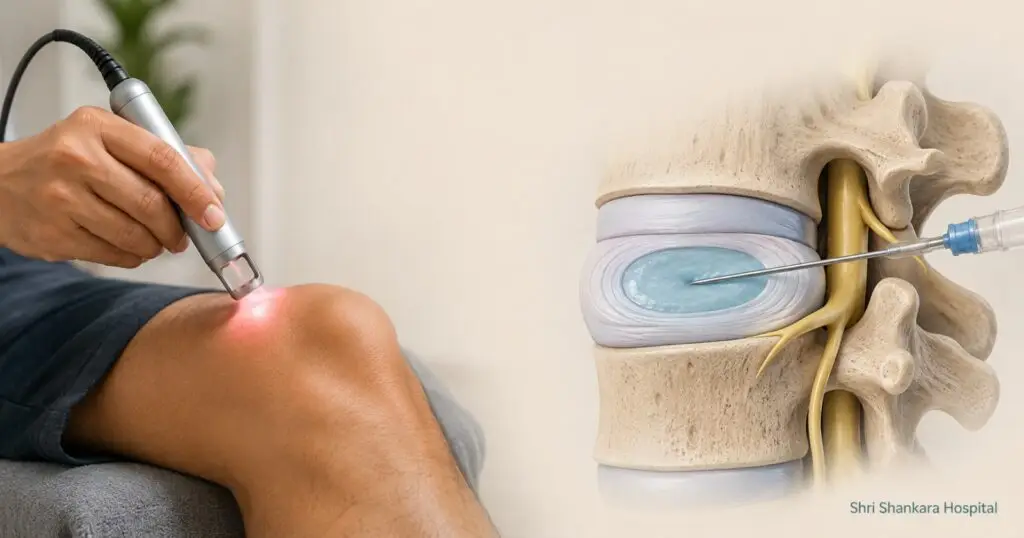
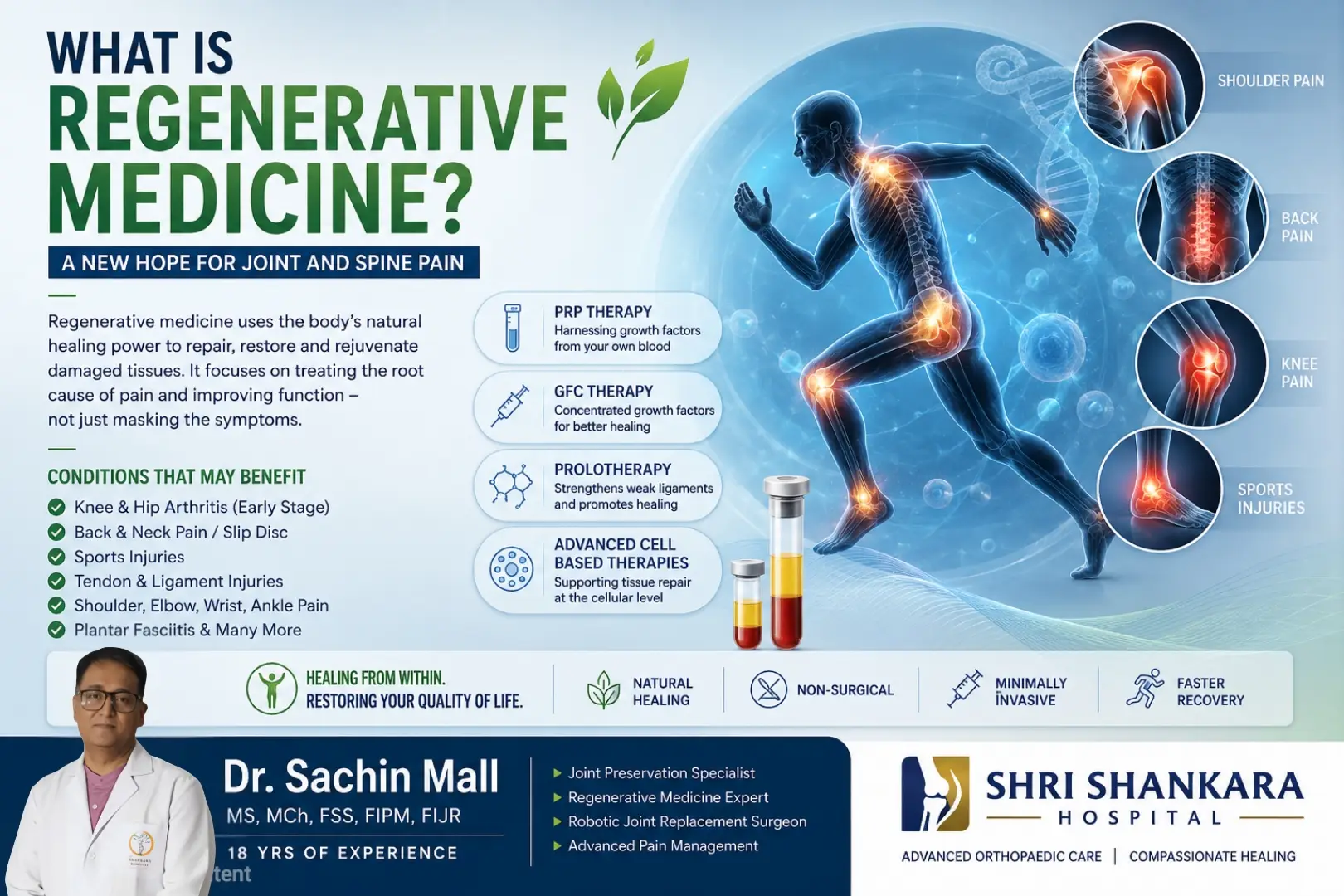
Regenerative medicine is a modern branch of medicine that aims to stimulate the body’s natural healing mechanisms. Instead of simply masking pain, regenerative therapies are designed to encourage repair of injured or degenerated tissues, helping reduce pain and improve mobility in appropriately selected patients.
In orthopaedics, regenerative medicine is commonly used for conditions involving joints, tendons, ligaments, muscles, and certain spine disorders.
How Does Regenerative Medicine Work?
Our body naturally releases growth factors and healing cells whenever an injury occurs. Regenerative therapies concentrate these natural healing components and deliver them precisely to the affected area under sterile conditions.
The goals of treatment include:
- Reducing pain and inflammation
- Supporting tissue healing
- Improving joint function
- Enhancing mobility
- Delaying disease progression in selected cases
- Helping patients return to their daily activities
Conditions That May Benefit From Regenerative Medicine
Regenerative therapies may be considered for carefully selected patients with:
- Early knee osteoarthritis
- Early-stage hip osteoarthritis
- Shoulder pain and rotator cuff injuries
- Tennis elbow and golfer’s elbow
- Plantar fasciitis
- Ligament sprains
- Tendon injuries
- Sports injuries
- Certain cases of chronic back pain related to degenerative changes
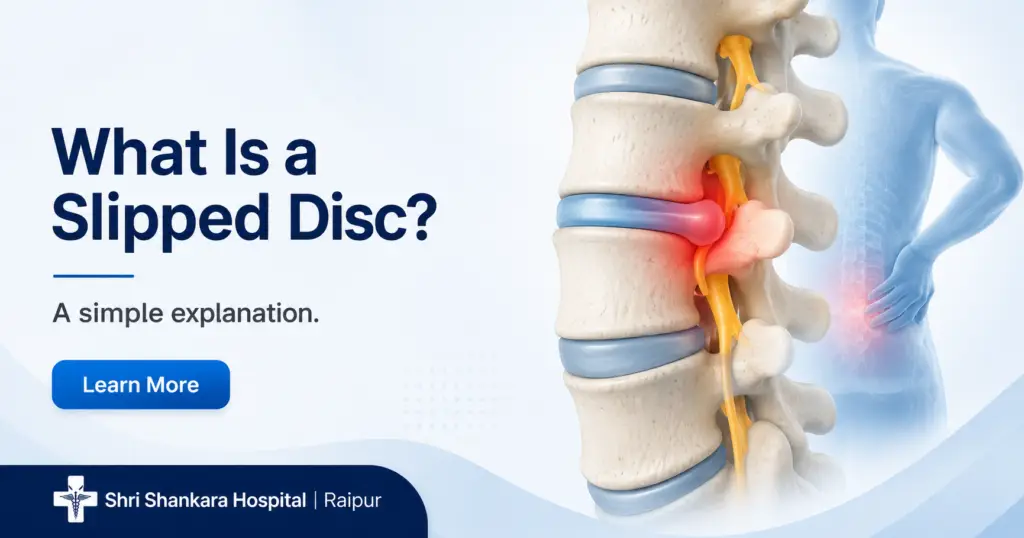
- Some patients with disc-related pain after proper evaluation
Not every patient is a candidate. A detailed clinical examination and imaging studies help determine whether regenerative treatment is appropriate.
Common Regenerative Treatments
1. Platelet-Rich Plasma (PRP)
PRP is prepared from the patient’s own blood. Platelets contain growth factors that may support healing of injured tissues.
PRP is commonly used for:
- Tendon injuries
- Sports injuries
- Early arthritis
2. Growth Factor Concentrate (GFC)
GFC is an advanced form of regenerative therapy that provides a concentrated preparation of growth factors. It is often considered in selected patients with early arthritis and chronic tendon disorders.
3. Prolotherapy
Prolotherapy involves injecting a solution into weakened ligaments or tendons to stimulate the body’s natural healing response. It may be useful in carefully selected cases of chronic musculoskeletal pain.
4. Cell-Based Regenerative Therapies
Certain specialized regenerative treatments involving cells are being studied and used for selected orthopaedic conditions.
Their role depends on the specific diagnosis, current scientific evidence, and applicable local regulatory guidelines.
What Are the Benefits?
Depending on the condition and individual patient, regenerative medicine may offer:
- A non-surgical treatment option
- A minimally invasive procedure
- Short treatment time
- Faster return to routine activities compared with major surgery in selected cases
- Reduced dependence on pain medications
- Improvement in pain and function in suitable patients
- Potential to delay surgery in selected cases
Results vary from person to person and depend on factors such as age, severity of disease, lifestyle, and adherence to rehabilitation.
Is Regenerative Medicine a Replacement for Surgery?
No.
Regenerative medicine is not a replacement for surgery in every patient.
Patients with advanced arthritis, severe deformity, complete ligament tears, or major structural damage may still require surgical treatment, including joint replacement or reconstructive procedures.
The key is choosing the right treatment for the right patient at the right time.
What Happens During the Procedure?
Most regenerative procedures are performed as outpatient treatments.
Typical steps include:
- Clinical evaluation and diagnosis
- Preparation of the regenerative injection, when applicable
- Sterile injection into the affected area, often using image guidance when needed
- Short observation period
- Home care instructions and a personalized rehabilitation plan
Most patients return home the same day.
Who Should Consider Regenerative Medicine?
You may benefit from an evaluation if you:
- Have persistent joint pain
- Have early arthritis
- Want to avoid or delay surgery, if medically appropriate
- Have sports-related injuries
- Continue to have pain despite physiotherapy or medications
- Wish to explore evidence-based, minimally invasive treatment options
Why Early Treatment Matters
Many patients ignore joint pain until it becomes severe.
Early evaluation allows more treatment options and may improve outcomes. When intervention is provided at the appropriate stage, it may help preserve joint function and maintain an active lifestyle.
Expert Care at Shri Shankara Hospital
At Shri Shankara Hospital, regenerative medicine is integrated with a comprehensive orthopaedic approach.
Every patient undergoes a detailed assessment to identify the root cause of pain before a personalized treatment plan is created.
Depending on the diagnosis, treatment may include:
- Regenerative therapies
- Pain management procedures
- Physiotherapy and rehabilitation
- Lifestyle modification
- Robotic joint replacement when surgery becomes necessary
Our goal is always to recommend the most appropriate, evidence-based treatment—not simply the most aggressive one.
About Dr. Sachin Mall
Dr. Sachin Mall, MS, MCh, FSS, FIPM, FIJR, is an Orthopaedic Surgeon with 18 years of experience in joint preservation, regenerative medicine, pain management, robotic joint replacement, and spine care.
He believes in a patient-centered approach, combining modern technology with evidence-based treatment to help patients reduce pain, improve mobility, and regain an active lifestyle.
Book Your Consultation
If knee pain, back pain, shoulder pain, or sports injuries are affecting your quality of life, early evaluation can make a significant difference.
Consult Dr. Sachin Mall at Shri Shankara Hospital to learn whether regenerative medicine is the right option for you.
Call: +91 92851 22111