What Is a Slipped Disc? Symptoms, Causes & Treatment
What Is a Slipped Disc? A Plain-Language Explanation
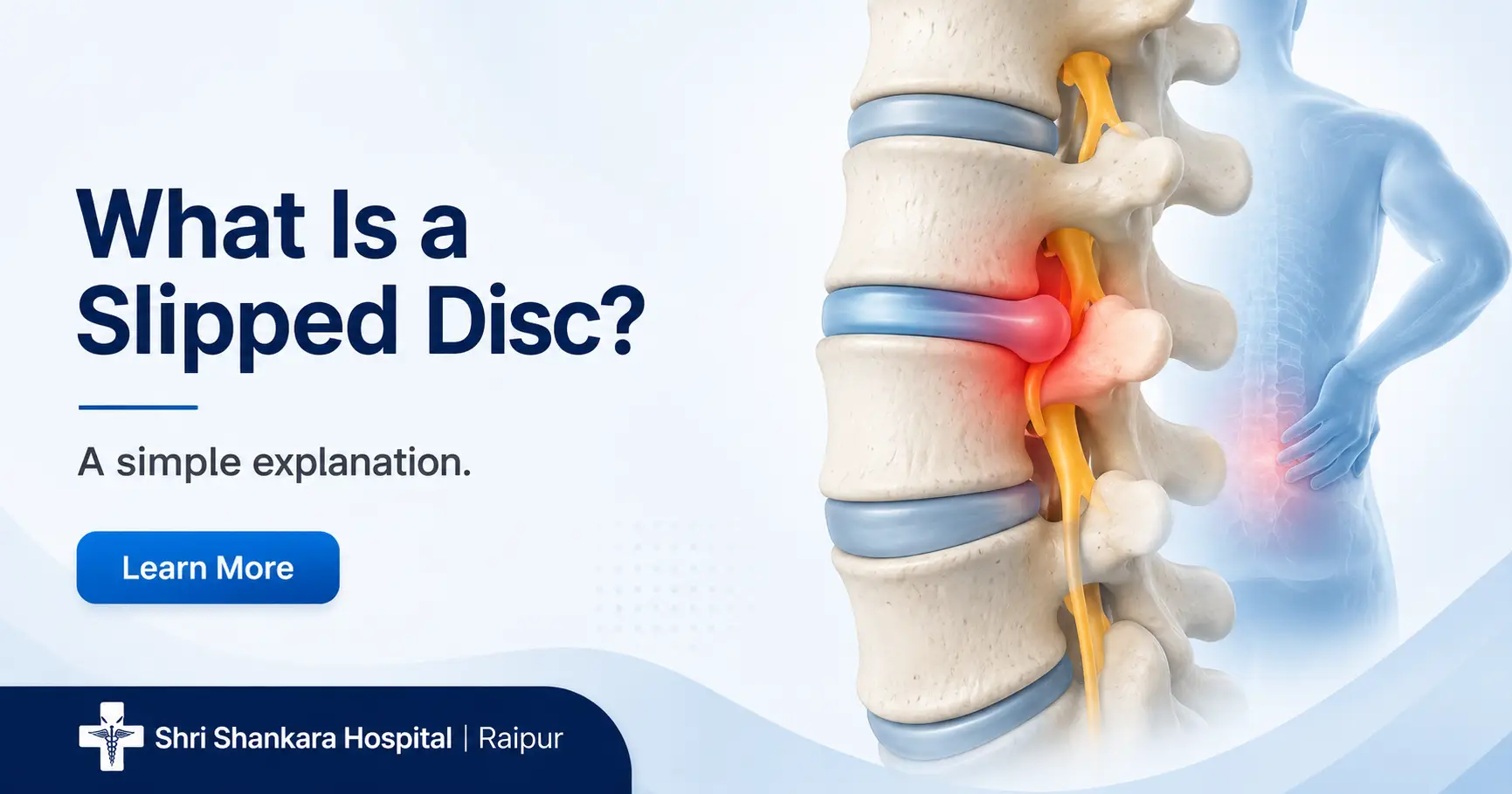
A slipped disc happens when the soft, cushion-like tissue between two of your spinal bones pushes out of its normal position, sometimes pressing on a nearby nerve. It’s a common cause of back or neck pain. Despite the name, the disc doesn’t actually “slip” out of the spine — it bulges or ruptures at one point.
Understanding what’s actually happening is often the first step toward feeling less anxious about it. If you’ve been told you have a slipped disc, or you’re trying to figure out if that’s what’s causing your pain, this article explains it in plain terms. It covers what it is, why it happens, and what to do next.
Understanding Your Pain: Why “Slipped Disc” Sounds Scarier Than It Is
Back or neck pain that comes on suddenly, or that shoots down an arm or leg, understandably worries people. The term “slipped disc” doesn’t help — it sounds like something has come loose inside your spine. In reality, your spinal discs are firmly attached between each vertebra. What happens is that the outer layer of a disc weakens or tears, allowing the softer inner material to bulge outward. This is more accurately called a herniated or prolapsed disc. “Slipped disc” is just the common, everyday name for the same thing.
“Slipped disc” is also used loosely by patients to describe a range of related findings that aren’t all identical. Doctors typically distinguish:
- Bulge — the disc’s outer layer weakens and the whole disc pushes outward slightly, without a clear tear.
- Protrusion — a more focal bulge where the inner material presses against a thinned but still-intact outer layer.
- Extrusion — the inner material breaks through the outer layer completely.
- Sequestration — a fragment of the inner material separates entirely from the disc.
These represent a spectrum rather than strictly separate conditions, and the everyday term “slipped disc” is generally used to cover all of them. The distinction matters mainly for how a doctor interprets your scan alongside your symptoms, not for how you should describe your pain to them.
What Actually Happens Inside the Spine
Each disc in your spine has two parts: a tough outer ring and a softer, gel-like centre. A slipped disc occurs when:
- The outer ring develops a weak spot or small tear, often from years of gradual wear, a sudden awkward movement, or heavy lifting.
- The soft inner material pushes through that weak spot.
- If the bulge presses on a nearby spinal nerve, it can cause pain, numbness, or weakness. This travels along the path of that nerve — for example, down the leg (sciatica) if it happens in the lower back.
Not every slipped disc presses on a nerve. Not every slipped disc causes noticeable symptoms at all. Many are discovered incidentally on scans done for unrelated reasons.
Common Symptoms Patients Describe
People experiencing a slipped disc often describe:
- Localised back or neck pain that may be dull or sharp
- Pain that radiates into an arm or leg, depending on which part of the spine is affected
- Numbness or tingling along the path of the affected nerve
- Muscle weakness in the affected limb
- Pain that worsens with sitting, bending, or coughing, and sometimes eases with lying down
Symptoms vary a great deal from person to person. Some people have significant pain with a relatively small disc bulge. Others have a larger bulge with minimal symptoms.
Neck (Cervical) vs. Lower Back (Lumbar) Slipped Discs
Where the affected disc sits in your spine changes what the symptoms typically look like. A lumbar (lower back) slipped disc more often causes pain radiating down one leg, sometimes with numbness in the foot or calf — commonly described as sciatica. A cervical (neck) slipped disc more often causes pain radiating down an arm, sometimes with numbness or weakness in the hand. Both follow the same underlying mechanism described above; only the location, and therefore which nerve pathway is affected, differs.
What Causes a Slipped Disc
A slipped disc is rarely caused by one single event, even when it feels sudden. Common contributing factors include:
- Natural disc wear and reduced water content in discs as we age
- Repeated heavy lifting, especially with poor technique
- Sudden twisting movements
- Prolonged sitting with poor posture
- Excess body weight placing added load on the spine
How a Slipped Disc Is Usually Confirmed
If your symptoms suggest a slipped disc, a doctor will typically start with a physical examination. This checks your reflexes, muscle strength, and the specific pattern of any pain or numbness. Imaging, most often an MRI, is used to help confirm the diagnosis and show which disc is affected and how significantly.
Imaging isn’t always needed straightaway for mild, short-lived symptoms. It becomes more important if symptoms persist, worsen, or come with any of the warning signs described below.
At a first evaluation, expect the doctor to ask when your pain started, what makes it better or worse, and whether it radiates anywhere. They’ll check your reflexes, strength, and sensation in the relevant limb, and may ask you to move in specific ways that reproduce or ease the pain. This clinical picture, not the scan alone, is what actually guides the initial plan.
Why an MRI Finding Doesn’t Tell the Whole Story
It’s worth knowing that MRI findings and symptom severity don’t always match up. Research on people with no back pain at all has found disc bulges and even herniations showing up on their scans. This means a scan showing a “significant” disc finding doesn’t automatically mean severe treatment is needed, and a relatively small finding doesn’t rule out real pain. Your doctor interprets the scan together with your actual symptoms and examination, rather than treating the image on its own as the full picture. This is also why a decision about surgery is never made from a scan alone.
What Helps, and What a Slipped Disc Diagnosis Actually Means for You
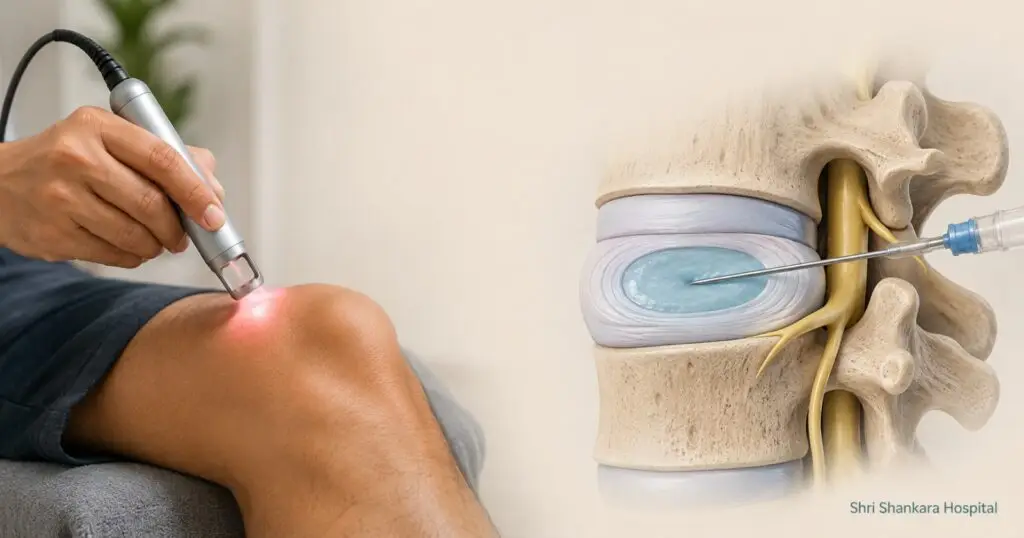
Being told you have a slipped disc is not, by itself, a diagnosis that means surgery is inevitable. In most cases, slipped discs are managed with non-surgical approaches first — guided physiotherapy, activity modification, and pain management, per generally accepted clinical practice. Surgery is considered only when symptoms are severe, persistent, or involve certain warning signs, described below. The right approach depends on your specific symptoms, how long you’ve had them, and what a clinical examination and imaging show together.
If You’re Waiting for Your Appointment
While you wait for a proper evaluation, a few general, low-risk steps are reasonable for most people. Stay as active as your pain allows, rather than resting completely. Avoid heavy lifting or twisting movements. If you already use over-the-counter pain relief safely, follow the packaging directions.
These are general suggestions, not a treatment plan. If your pain is severe, worsening, or includes any of the warning signs below, don’t wait for a routine appointment.
A Common Myth Worth Addressing
Many patients assume that a slipped disc diagnosis means they should avoid all movement and stay in bed until it heals. In most cases, this isn’t accurate, and prolonged bed rest can actually slow recovery rather than speed it up. Gentle, guided activity is usually more helpful than complete inactivity, though what’s appropriate for you specifically should come from your own doctor or physiotherapist rather than a general rule.
When a Slipped Disc Needs Urgent Medical Attention
Most slipped discs are not medical emergencies.
A small number of warning signs mean you should seek care right away, rather than waiting for a routine appointment:
- Sudden loss of bladder or bowel control
- Numbness in the groin or inner thighs (“saddle” area)
- Progressive weakness in a leg or foot that is getting worse
- Severe pain following a significant injury, such as a fall or accident
If any of these apply to you, seek medical attention immediately rather than researching further online.
Frequently Asked Questions
What is a slipped disc problem?
A slipped disc is when the soft inner material of a spinal disc pushes through a weakened outer layer, sometimes pressing on a nearby nerve. It’s a common, usually manageable cause of back or neck pain, rather than a rare or unusual condition.
What is a slipped disc in your back?
In the lower back (lumbar spine), a slipped disc occurs when a disc between two lower vertebrae bulges. This can press on a nerve root, which is often what causes the classic radiating pain down one leg that people describe as sciatica.
What is the remedy for a slipped disc?
Most slipped discs improve with non-surgical care: guided physiotherapy, activity modification, and pain management, under a doctor’s supervision. What’s actually appropriate for you depends on your specific symptoms and imaging. It’s best confirmed in a consultation rather than self-treated.
What is good for a slipped disc?
Gentle, guided movement and posture correction generally help more than complete bed rest, which can prolong recovery. A physiotherapist or spine specialist can guide you on which specific exercises and activities are safe for your particular case.
How is a slipped disc different from ordinary back pain?
Ordinary muscular back pain more often stays localised and tends to ease with rest, though this isn’t a hard rule — muscular pain can radiate too. A slipped disc more often causes pain that radiates into an arm or leg, along with possible numbness or weakness. That radiating pattern is a useful clue that a nerve may be involved, but it isn’t diagnostic on its own — a clinical examination is what actually confirms the cause.
Does every slipped disc need surgery eventually?
No. Most people with a slipped disc recover with non-surgical treatment and never need surgery. It’s typically reserved for cases with severe, persistent symptoms, or one of the urgent warning signs described above.
Getting a Clear Answer About Your Own Pain
If you’re not sure whether your back or neck pain is a slipped disc or something else, a clinical evaluation is the most reliable way to find out. Imaging can be added where needed. Dr. Sachin Kumar Mall (MS, MCh, FSS, FIPM, FIJR) has 18 years of experience in orthopaedics. He sees patients for spine-related concerns at Shri Shankara Hospital, New Rajendra Nagar, Raipur, as part of a broader orthopaedic practice covering joint, spine, and sports injury care.
Why Patients Choose This Approach
The approach described throughout this article reflects how spine consultations are approached at Shri Shankara Hospital: examining your actual symptoms and clinical picture, rather than treating a scan finding in isolation.
- Imaging is interpreted alongside your reflexes, strength, and symptom pattern, not read in isolation.
- Non-surgical management is the starting point for most patients; surgery is reserved for the specific situations described above.
- Spine care sits within a broader orthopaedic practice, so related joint or nerve-pattern concerns can be evaluated in the same place.
This is the same approach reflected in the sections above, not a separate set of claims.
Book a consultation with Dr. Sachin Kumar Mall to get a clear answer about what’s actually causing your back or neck pain, and what the right next step looks like for you.
This article is for general education and does not replace a personal medical consultation. If you’re experiencing any of the urgent warning signs listed above, seek medical attention immediately.