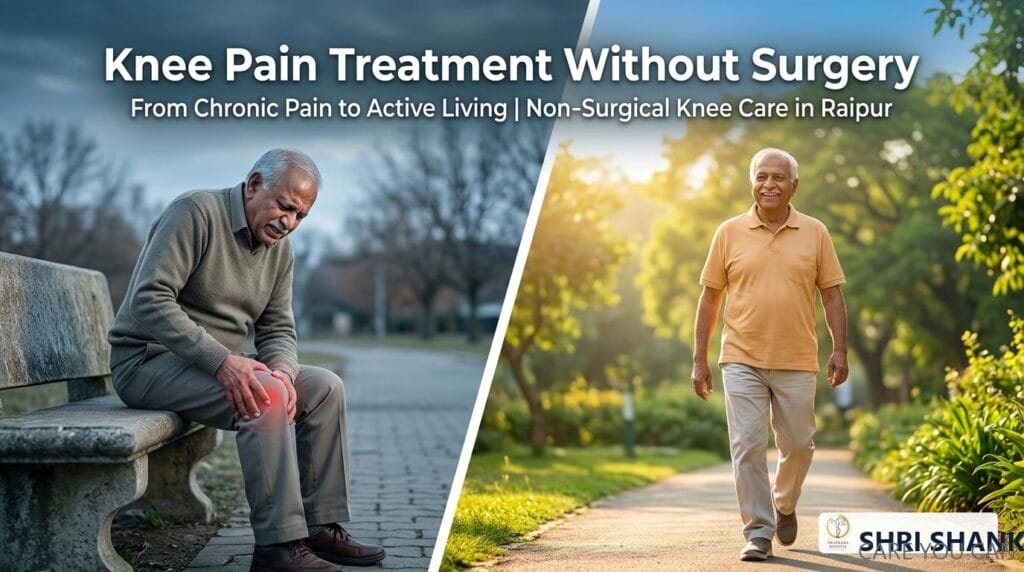
Knee pain can make small daily tasks feel hard. Climbing stairs, sitting on the floor, or even a short walk can start to hurt. You are not alone. A five-site Indian study found knee arthritis in about 28.7% of adults above 40, and a 2024 study in rural South India found 34.6%. Many people are told to either live with the pain or go for knee replacement. But there is a middle path that many people do not know about. It is called PRP therapy.
PRP Therapy for Knee Pain (platelet rich plasma therapy for knee pain) in Raipur is now offered by several orthopedic doctors. In this guide, I will explain in simple words what PRP is, how this knee pain treatment in Raipur works, who it suits, what it may cost, and what you should ask your doctor before you decide.
Quick Answer: What Is PRP Therapy for Knee Pain?PRP stands for Platelet Rich Plasma. In this treatment, the doctor takes a small amount of your own blood, spins it in a machine to collect the healing part, and injects it into your painful knee. The aim is to reduce pain and swelling and help the joint heal. A 2026 review found it reduces knee pain more than placebo, and it works best for mild to moderate knee arthritis and some sports injuries. It is not a magic cure, and it may not help if the knee is badly worn out. |
What Is PRP Therapy?
Your blood has many parts. One of them is called platelets. Platelets are tiny cells that help your body heal when you get a cut. They carry natural chemicals called growth factors, which tell the body to repair damaged tissue.
In PRP therapy, the doctor collects more of these platelets in one small amount of fluid. This fluid is then placed right where the pain is. Because it is made from your own blood, the chance of allergy or rejection is very low.
The full name, platelet rich plasma, sounds heavy. Doctors call it a regenerative treatment because it uses your body’s own healing power. Just remember it like this: your own blood, made stronger, put back where it hurts.
How Does PRP Help a Painful Knee?
Inside a healthy knee, a smooth layer called cartilage covers the bone ends. It works like a cushion. With age, injury or extra weight, this cushion becomes thin and rough. The knee then becomes stiff, swollen and painful. This is called knee osteoarthritis. It is very common in India: around 62 million people had osteoarthritis in 2019, and the knee is the joint most often affected.
PRP may help in three ways:
- It calms inflammation. Less swelling often means less pain.
- It supports healing. The growth factors may help the tissue around the joint recover.
- It may improve joint comfort. Many people find it easier to walk and move after a few weeks.
Does it really work? Newer studies say it can. A meta-analysis published in August 2026 pooled five double-blind trials with 761 patients and found that PRP reduced knee pain more than placebo. Doctors do not fully agree yet, though. The American College of Rheumatology and OARSI (2019) did not recommend PRP, and other guidelines say there is not enough proof either way. So think of PRP as a way to ease pain and slow down trouble, not a way to make a 20-year-old knee again.
Who Is a Good Candidate for PRP?
PRP may suit you if:
- You have mild to moderate knee arthritis.
- Your knee pain has lasted for weeks or months, and tablets give only short relief.
- You want to avoid or delay knee replacement surgery.
- You are an active person with a sports injury, like a mild ligament or tendon problem.
- Painkillers upset your stomach or you cannot take them for a long time.
- You want a non surgical knee pain treatment, or knee arthritis treatment without surgery.
A 2025 review of six trials with 1,162 patients with mild to moderate knee arthritis supports PRP for this group. Still, only a doctor can tell you if you are a good fit. An examination and an X-ray, and sometimes an MRI, are usually needed first.
Who Should Not Take PRP?
PRP is not for everyone. Please talk to your doctor first if:
- You have a very severe, “bone on bone” knee. In such cases, PRP may give only small or short relief.
- You have a blood disorder or very low platelet count.
- You are on strong blood thinners.
- You have an active infection, fever, or skin infection near the knee.
- You have cancer or are under treatment for it.
- You are pregnant.
Be open with your doctor about every medicine you take. This keeps you safe.
How Is PRP Done? Step by Step 
The procedure is simple and is usually done in the clinic on the same day. You can go home after it.
- Check-up: The doctor asks about your pain, checks your knee and looks at your reports.
- Blood draw: A small amount of blood is taken from your arm, just like a normal blood test.
- Spinning: The blood goes into a machine called a centrifuge. It spins fast and separates the platelet rich part.
- Cleaning: The skin around your knee is cleaned well to keep it germ free.
- Injection: The PRP is injected into the knee joint. Many doctors use ultrasound to guide the needle so that it reaches the right spot.
- Rest: You sit for a short time and then go home.
How Long Does PRP Take to Work?
PRP is not an instant fix like a pain injection. Most people start to feel better after 3 to 6 weeks. The best results are often seen after 2 to 3 months. In the 2026 review of 761 patients, pain was still lower than with placebo at six months. How long it lasts differs from person to person. Some people feel better for 6 months to a year or more. Others may need a repeat dose.
Most studies use one to three injections, and a French expert group also suggests 1 to 3, spaced a few weeks apart. Your doctor will plan this based on your knee.
Risks and Side Effects (The Cons of PRP)
PRP is generally safe when done by a trained doctor in a clean setting. Still, no treatment is risk free. Possible side effects are:
- Pain or swelling at the injection spot for a few days
- Mild stiffness
- Bruising
- Rarely, infection
- No improvement at all in some people
Call your doctor right away if you get high fever, strong pain, redness or heavy swelling after the injection.
PRP Recovery Time: What to Do After the Injection
Good aftercare helps you get better results.
- Rest the knee for the first 24 to 48 hours.
- Do not take anti-inflammatory painkillers like ibuprofen or diclofenac unless your doctor allows it, as they may reduce the effect of PRP. Ask your doctor what to take if you have pain.
- Avoid heavy exercise, running or long travel for the first week.
- Start gentle movements and physiotherapy as advised.
- Keep your weight in check.
- Do not skip your follow-up visit.
PRP vs Steroid vs Hyaluronic Acid vs Knee Replacement
| Option | How it works | Speed of relief | Best for |
| PRP | Uses healing part of your own blood | Slow, 3 to 6 weeks | Mild to moderate arthritis, some sports injuries |
| Steroid injection | Reduces swelling quickly | Fast, in a few days | Short term relief during a flare-up |
| Hyaluronic acid | Acts like a joint lubricant | Moderate, a few weeks | Mild to moderate arthritis |
| Knee replacement | Replaces the damaged joint | After surgery and recovery | Severe arthritis with daily life badly affected |
In a 2026 review, PRP gave better pain and function scores than hyaluronic acid alone after six months. Another 2026 analysis of 18 trials (1,376 patients) found PRP plus hyaluronic acid worked better than PRP alone. Still, there is no single best option for everyone. The right choice depends on your age, weight, X-ray findings and daily needs.
What Is the Cost of PRP Therapy for Knee Pain in Raipur?
Many people ask about the PRP injection price and PRP treatment cost in Raipur. The honest answer is that the cost is different in each clinic. It depends on:
- The kit and machine used to prepare PRP
- Whether ultrasound guidance is used
- The number of injections you need
- One knee or both knees
- Doctor fees and hospital charges
PRP is often not covered by health insurance in India because it is seen as an elective procedure. Always ask for the full cost in advance, including the number of sittings, so there are no surprises. (Add your clinic’s price range here if you want to publish it.)
Online price guides for India show about Rs 10,000 to Rs 50,000 per knee injection, but these are broad estimates and not Raipur prices. For comparison, a study of top US hospitals found prices from USD 350 to USD 2,815, with a median of USD 800. Always take a written quote from your own clinic.
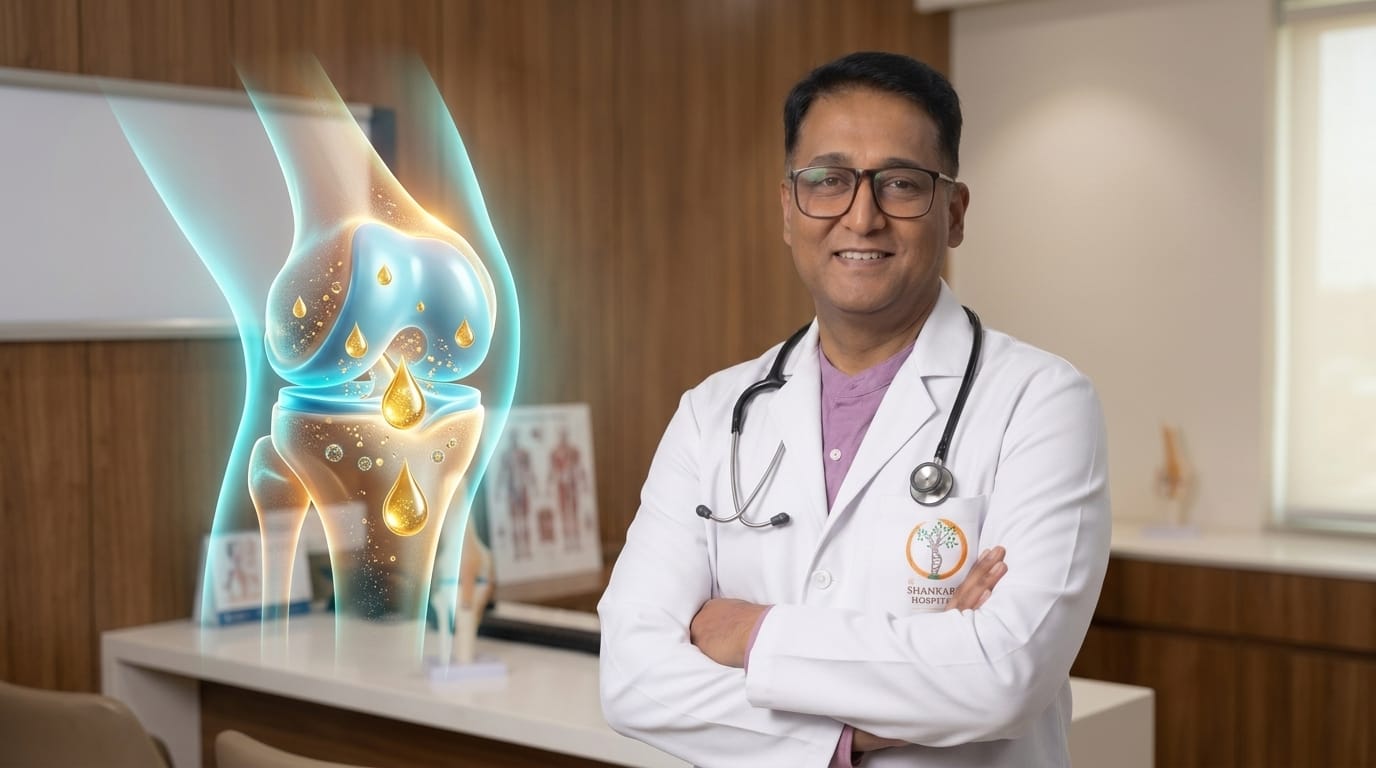
About Dr Sachin Mall

Dr Sachin Mall (MBBS, MS, MCh, FSS, FIPM, FIJR) is an orthopedic doctor in Raipur, Chhattisgarh, who practices at Shri Shankara Hospital, an orthopedic hospital near Rishabh Regency and Samta Parisar in the Tikrapara and New Rajendra Nagar area. He sees patients with knee pain, joint pain, arthritis and bone and joint injuries, and he helps them choose between non surgical options like PRP Therapy for Knee Pain and surgery when needed. He is the Director and Chief Orthopaedic Surgeon at Shri Shankara Hospital, Raipur, with over 18 years of clinical experience in orthopaedic and musculoskeletal care. Patients who visit him can expect a proper check-up, a clear explanation in simple Hindi or English, and an honest opinion on whether PRP is right for their knee. To book a visit, call Shri Shankara Hospital at +91 9825122111 & +919203843650.
Frequently Asked Questions
| Que. | Does PRP work for knee pain? |
| Ans. | Yes, it helps many people with mild to moderate knee arthritis. A 2026 review of five trials (761 patients) found it cut pain more than placebo. Results are not the same for everyone, and it works less well in very severe arthritis. |
| Que. | How many PRP injections are needed for the knee? |
| Ans. | Some people need one injection. Others need two or three, a few weeks apart. Your doctor will decide after checking your knee. |
| Que. | How long does PRP last in the knee? |
| Ans. | It may last from about 6 months to a year or more. This depends on your age, weight, activity and how bad the arthritis is. |
| Que. | What is the cost of PRP Therapy for Knee Pain in Raipur? |
| Ans. | The price depends on the clinic, the kit used, the number of injections and whether ultrasound is used. Ask the clinic for a clear, full estimate before the procedure. |
| Que. | Is PRP safe? |
| Ans. | When done by a trained doctor in a clean setting, PRP is generally safe. Side effects are usually mild and short. |
| Que. | Where can I get a PRP injection near me in Raipur? |
| Ans. | A PRP injection for the knee in Raipur should be given by a qualified orthopedic doctor in a clean hospital setup. You can book a visit with Dr Sachin Mall at Shri Shankara Hospital, Raipur. |
Final Words
PRP therapy for knee pain in Raipur is a safe, simple and non surgical option for many people with early or moderate knee problems. It is not a magic cure, but with the right doctor, the right plan and good habits like exercise and weight control, it can help you move with less pain.
If knee pain is slowing you down, do not ignore it. Book a check-up for knee pain treatment in Raipur with an orthopedic specialist, and ask whether PRP is right for you.
Disclaimer: This article is for general information only and is not a substitute for medical advice. Please consult a qualified doctor for your own condition.